

Relying on hotel chains for a 12-month project isn’t just expensive. It’s a direct threat to your project’s bottom line. You’ve likely felt the administrative strain of juggling multiple short-term bookings whilst trying to source reliable long term contractor housing. It’s frustrating to see your best workers suffer from fatigue because their living conditions don’t support a proper rest. Logistical friction shouldn’t be the reason your project misses a milestone.
This reference guide shows you how to secure strategic accommodation that simplifies your operations. You’ll discover how professionally managed homes can reduce costs by up to 50% compared to traditional hotels. We’ll outline the 2026 standards for move-in ready properties, including high-speed Wi-Fi and fully equipped kitchens. You’ll learn how to consolidate your housing needs into a single point of contact to improve both your budget and your staff retention.
Key Takeaways
- Understand the transition from basic temporary “digs” to professionalised workforce housing standards designed for stays exceeding 28 days.
- Optimise project budgets by comparing per-person costs and eliminating the hidden expenses common in traditional hotel stays.
- Identify the essential features of high-performance long term contractor housing that reduce workforce fatigue and improve staff retention.
- Apply a strategic framework to assess your housing requirements and manage the logistical friction of scaling team sizes mid-project.
- Streamline operations by outsourcing property sourcing and lease management to a managed stay service, removing the administrative burden from your team.
Defining Long Term Contractor Housing for 2026 Projects
Long term contractor housing represents a strategic shift in how project managers handle workforce logistics. It is no longer about simply finding a bed for the night. Instead, it is the provision of purpose-built or professionally managed residential units for teams on assignments exceeding 28 days. This model moves beyond the traditional concept of corporate housing by catering specifically to the operational rhythms of technical teams. Unlike individual residential lets, which are often managed by private landlords with little understanding of commercial requirements, managed team housing offers a single point of contact and standardised service levels across multiple locations.
The 2026 landscape for infrastructure and energy projects demands a more robust approach. Relying on ad-hoc bookings or hotel availability is a high-risk strategy. It creates unnecessary administrative friction and leaves your team vulnerable to sudden price spikes or seasonal cancellations. Professionalised long term contractor housing provides the stability required to maintain a fixed project budget whilst ensuring your workforce remains settled and focused on the job at hand.
The Evolution of Workforce Lodging
Modern projects prioritise worker welfare as a primary driver of productivity. The industry has evolved from the era of “digs” where accommodation was often an ad-hoc afterthought. Today, project leads recognise that poor living conditions lead directly to workforce fatigue and high staff turnover. Integrated housing strategies now treat accommodation as an extension of the site environment. Serviced elements like regular cleaning, high-speed internet, and fully equipped kitchens are now baseline requirements for professional teams. These features allow staff to maintain a healthy work-life balance, reducing the mental load of life on the road.
Why 2026 Projects Demand More Stability
The scale of UK infrastructure and renewable energy builds in 2026 requires longer deployment periods. Specialised engineers and technicians are often on-site for many months or even years. These professionals expect more than a cramped hotel room can provide. They need a home environment that supports long stay contractor accommodation standards. Providing a consistent, high-quality living space is a competitive advantage in a tight labour market. It ensures your most valuable assets stay on the project until completion, protecting your timeline and your ROI. This level of stability is something a hotel booking engine simply cannot replicate over a 12-month cycle.
Essential Features of High-Performance Workforce Accommodation
High-performance long term contractor housing prioritises utility over aesthetics. For a project manager, the goal is to ensure the workforce arrives on site rested and ready. This requires moving away from the decorative focus of leisure rentals. Instead, every room must meet a work-ready standard. This includes durable furnishings, ample storage for personal protective equipment, and layouts that reduce the daily friction of communal living. When a property is designed for function, it directly supports the team’s ability to maintain a healthy work-life balance whilst away from home. A well-executed long term contractor housing strategy addresses small, daily frustrations before they impact the project schedule.
Self-Catering and Shared Living Spaces
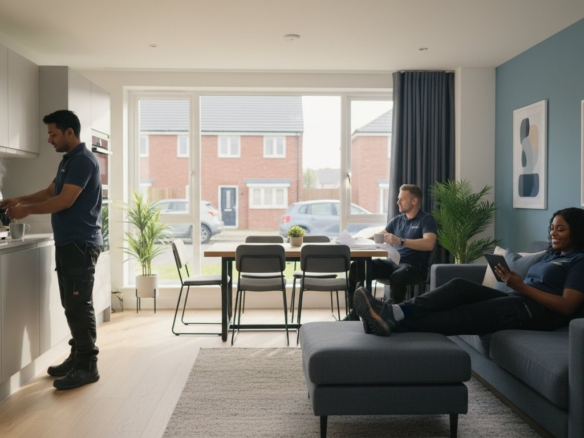
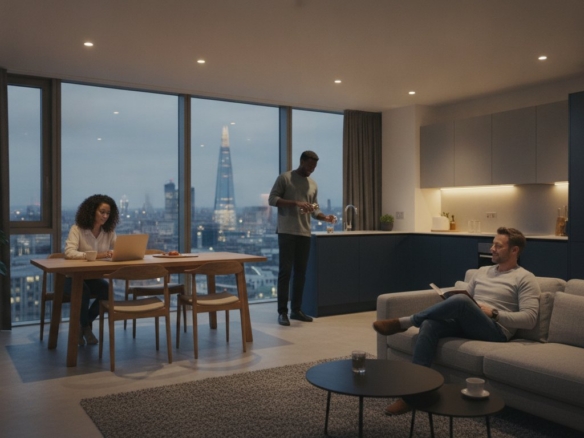
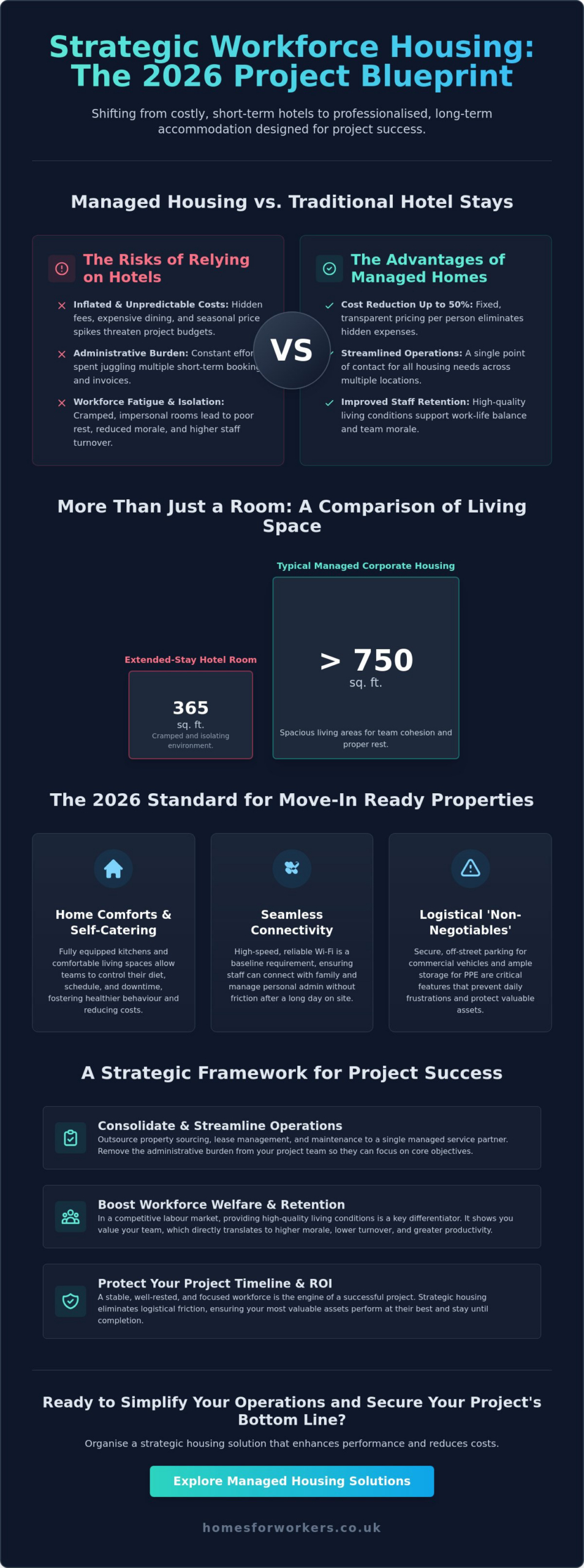
A fully equipped kitchen is a critical tool for project success. It allows teams to control their diet and schedule, fostering healthier behaviour compared to the limited and often expensive options of hotel dining. Shared living areas should be spacious enough for team cohesion but functional enough to allow for individual downtime. Utilising multi-bedroom contractor accommodation keeps crews together. This builds morale and simplifies the morning commute to the site. It also eliminates the isolation often felt in individual hotel rooms, which is a major factor in workforce fatigue. Providing a space where a team can cook and relax together creates a stable environment that mirrors a home setting. Corporate housing units often exceed 750 square feet, offering significantly more breathing room than the average 365-square-foot extended-stay hotel room.
The “Non-Negotiables”: Parking and Connectivity
Logistics shouldn’t stop at the front door. Secure, off-street parking for commercial vehicles is a top-tier requirement that many residential lets overlook. If a technician has to spend time searching for a van-friendly space every evening, their recovery time is compromised. Similarly, high-speed Wi-Fi is no longer a luxury; it is a vital utility. It supports essential administrative tasks and allows staff to stay connected with their families. Reliability is key here. A work-ready home must provide the same level of connectivity as a professional office. While Federal per diem lodging rates provide a benchmark for costs, the value of these specific features often exceeds the nightly price tag by preventing project delays.
On-site laundry facilities are another essential feature. They eliminate the logistical burden of finding local launderettes, saving hours of personal time each week. When these elements are managed correctly, the administrative load on the project lead vanishes. If you need to ensure your team has everything they need to perform, you can view our managed stay options to see how we handle these details for you. Every feature in a high-performance property exists to remove a hurdle, allowing your specialists to focus entirely on their primary objectives.
The Economic Case: Managed Housing vs. Traditional Hotel Stays
Hotels are designed for high-margin, short-stay travel. For a project manager, this often results in a persistent budget leak. When you calculate the per-person, per-night (PPPN) cost, traditional hotels rarely compete with managed long term contractor housing. For teams of four or more, the savings are immediate. A managed home offers a fixed rate that remains stable for the duration of your project. This provides the budget certainty you need to forecast accurately. You don’t have to worry about seasonal price spikes or city-wide events that suddenly double your lodging expenses.
The true cost of a hotel stay extends far beyond the room rate. We call this the hotel tax. It includes the mandatory reliance on restaurants and takeaway services. By providing a fully equipped kitchen, you create a Kitchen Dividend. This typically saves upwards of £20 per person, per day. Over a six-month project with a team of ten, that’s a saving of over £36,000 on food alone. Add the cost of commercial laundry services and the economic case for residential housing becomes undeniable. You aren’t just paying for a bed; you’re investing in a more efficient financial model. Furnished homes for contractors offer a practical alternative that consolidates these costs into a single, predictable rate.
Hard Costs: A Room vs. A Home
Residential units offer a tiered pricing structure that rewards duration. Unlike hotels that charge per head, managed homes allow you to house multiple contractors under one roof for a single, consolidated fee. This model eliminates the hidden extras like parking fees and Wi-Fi charges that often bloat hotel invoices. You get a clear, predictable cost profile that aligns with your project milestones. These properties are designed for the long haul, meaning you don’t pay for the vanity services of a hotel that your team never uses.
Soft Costs: Administrative Friction and Productivity
The administrative burden of managing dozens of individual hotel receipts is a significant time-sink. Managing a team of 20 in a hotel means processing 140 individual breakfast and laundry receipts every week. It’s a logistical nightmare. Managed contractor accommodation replaces this chaos with a streamlined system. You get one point of contact and one monthly invoice. This frees up your project leads to focus on site delivery rather than expense claims.
Quality accommodation also impacts your bottom line through workforce stability. High-quality housing reduces the churn of specialised contractors who may otherwise leave for projects with better living standards. Research into employer strategies for housing suggests that providing stable, comfortable environments is a key factor in staff retention. Better sleep leads to lower absenteeism and higher productivity on site. When you reduce recruitment costs and site delays, the ROI of professional housing extends far beyond the initial booking fee.
Evaluating and Scaling Your Long-Term Housing Strategy
Scaling long term contractor housing across multiple sites requires a methodical framework. It isn’t just about finding available rooms. It’s about matching property types to the specific operational needs of your workforce. A successful strategy accounts for both planned long-term stays and the necessity for rapid deployment. When project timelines shift, your housing must adapt. You need to manage fluctuating headcounts without compromising on safety or quality. This requires a partner capable of handling UK-wide logistics whilst maintaining strict compliance standards. Efficiency is built on preparation, not reaction.
Step 1: Assessing Project Scope and Team Density
Effective scaling begins with team density. You must match property types to specific crew roles. Senior engineers often require quieter environments with dedicated workspace to handle administrative reporting. Ground crews, conversely, benefit from larger shared homes that keep the unit together. This fosters better communication and morale. Proximity to the site is your most important metric. Every extra mile added to the morning commute increases fuel costs and worker fatigue. For those managing renewable energy project accommodation, remote locations present unique challenges. You need to secure housing that is close enough to the site to minimise travel time. This ensures your specialists spend more time on site and less time in transit.
Step 2: Vetting Providers for Professional Standards
Reliability is the foundation of a national housing portfolio. When evaluating a managed stay service, look beyond the price per night. Verify their commitment to HMO compliance and health and safety certifications. A professional provider handles the heavy lifting of lease management and utility setup. They ensure every property meets the legal requirements for multiple occupants, protecting you from regulatory risk. Professionalism means no surprises. You need to know that every house in your portfolio adheres to the same high standards, regardless of location.
Ensure the provider can deliver consolidated invoicing. This removes the administrative friction discussed in previous sections. You need a partner that acts as a behind-the-scenes fixer. They should manage everything from property sourcing to ongoing maintenance. This allows your project leads to focus on site delivery rather than property management. Managing team rotations and fluctuating headcounts shouldn’t be your burden. A flexible strategy allows you to scale up or down as project phases change. To see how we can streamline your portfolio, request a bespoke housing proposal today. We provide the stability you need to manage complex projects with confidence.
Managed Stay Services: Removing the Administrative Burden
Project managers are often forced into the role of accidental property managers. Handling long term contractor housing in-house is an inefficient use of high-value time. It involves complex lease negotiations, utility setups, and constant reactive maintenance. Homes For Workers acts as your behind-the-scenes fixer. We remove the logistical friction of workforce lodging entirely. Our managed stay services provide a single point of contact for your entire national portfolio. This allows you to focus on primary site objectives whilst we manage the heavy lifting of accommodation. Efficiency isn’t just about the property; it’s about the management system behind it.
The “Quiet Competence” of Professional Management
Outsourcing your housing needs brings a sense of operational calm to a fast-moving project. We don’t just book rooms. We source, vet, and maintain properties that meet specific technical requirements. This includes ensuring strict compliance with health and safety standards and local HMO regulations. If a boiler fails late at night or a Wi-Fi connection drops during a critical reporting cycle, it’s our problem to solve. We provide proactive maintenance and support throughout the duration of the extended stay. This removes the stress of property management from your site leads. You get the reassurance of a partner who understands the pressures of major infrastructure builds. We act as a protective buffer, ensuring your team has a stable environment to return to every night.
Streamlined Logistics for 2026 and Beyond
The scale of 2026 projects requires more than just a simple spreadsheet. Our managed services leverage technology to provide better reporting and consolidated invoicing. We take hundreds of potential receipts and turn them into a single, clean monthly statement. This eliminates the administrative burden on your finance department and reduces the risk of budget overruns. Flexibility is also a core component of our service. As project phases evolve and headcounts fluctuate, we adapt the housing solution to match your current needs. You aren’t locked into rigid hotel contracts that don’t allow for change. You gain a scalable partner capable of supporting your workforce across the UK. This strategic approach ensures your housing remains an asset rather than a logistical hurdle.
Strategic housing management is a clear competitive advantage in today’s market. It protects your project budget, supports worker welfare, and streamlines your daily operations. Don’t let lodging logistics slow down your site progress or drain your resources. Organise your team accommodation with Homes For Workers today. We handle the complex details so your team can focus on delivering the project on time.
Optimising Your Project Logistics for 2026
Strategic housing is no longer just a line item on a spreadsheet. It is a critical project asset that directly impacts your ROI and workforce stability. By shifting from ad-hoc hotel bookings to managed long term contractor housing, you eliminate the hidden costs of dining and laundry. You also remove the administrative friction that bogs down your project leads. A single point of contact ensures your teams are rested and ready to perform from day one. This proactive approach protects your budget and your people.
Homes For Workers provides specialised team accommodation with UK-wide national coverage for major infrastructure projects. We handle the heavy lifting of property sourcing and maintenance whilst providing consolidated invoicing to simplify your accounts. This level of professional management allows you to focus on delivering site milestones with quiet confidence. Secure your project housing with our managed stay services today. Your project deserves the stability and peace of mind that comes from a dedicated housing partner.
Frequently Asked Questions
What is the minimum stay for long term contractor housing?
The standard minimum stay for our long term contractor housing is 30 days. This duration ensures compliance with local residential regulations and distinguishes our professional service from short-term holiday rentals. For projects requiring shorter deployments, we offer flexible stay options. However, the most cost-effective rates and budget certainty are reserved for these longer-term commitments that align with major project milestones.
How does managed contractor housing differ from a standard holiday let?
Managed housing prioritises functional, work-ready environments over decorative aesthetics. Unlike standard holiday lets, these properties are vetted for commercial needs like secure parking and high-speed connectivity. You deal with a professional managed stay service rather than an individual private landlord. This ensures consistent service levels and a single point of contact for all maintenance and administrative issues, removing the logistical friction common in leisure rentals.
Can we book housing for a large team of 20+ contractors in one location?
We can accommodate large teams of 20 or more by securing multiple properties within close proximity. This strategy keeps your workforce together whilst ensuring every individual has adequate space and facilities. We manage the logistics of sourcing these clusters to minimise travel time to your project site. This approach is more effective than hotels for maintaining team cohesion and morale on major infrastructure builds.
Are utility bills and Wi-Fi included in the long-term rate?
Yes, all utility bills and high-speed Wi-Fi are included in a single, fixed rate. This all-inclusive model covers heating, water, electric, and council tax. It removes the administrative burden of setting up accounts or managing individual invoices for your team. You receive one predictable cost that covers all essential services for the duration of the stay, making project budgeting simple and transparent.
How do you ensure properties are compliant with health and safety regulations?
Every property undergoes a rigorous vetting process to ensure full compliance with UK health and safety regulations. This includes verifying gas safety certificates, electrical inspections, and fire safety standards. We also ensure that properties meet specific HMO licensing requirements where applicable. Our management team conducts regular checks to maintain these professional standards, ensuring your long term contractor housing remains a safe environment for your workforce.
What happens if our project duration changes or is extended unexpectedly?
We offer flexible leasing options designed to accommodate the variable timelines of large-scale projects. If your project is extended, we prioritise securing your current accommodation to prevent workforce disruption. We understand that infrastructure timelines often shift. Our team acts as a behind-the-scenes fixer to adjust your housing plan as project phases change, providing the stability you need to manage unexpected delays without stress.
Do your properties come with guaranteed parking for large vans?
We prioritise properties that offer secure, off-street parking suitable for commercial vehicles. This is a non-negotiable requirement for many of our professional clients. We understand that technicians and engineers need safe locations to park vans loaded with tools and equipment. During the sourcing phase, we specifically vet for parking capacity to ensure your team’s daily logistics remain frictionless and secure.
How does consolidated invoicing work for multiple project sites?
Consolidated invoicing streamlines your finance operations by bundling all housing costs into one monthly statement. Even if you have teams across multiple project sites nationwide, you receive a single, clear invoice. This eliminates the need to process dozens of individual receipts or property bills. It provides your accounts team with a transparent view of total housing expenditure, making budget tracking and expense management highly efficient.